The word “green” has been overused in the cleaning industry for years. It has appeared on labels that described products with little actual environmental benefit, on marketing materials that made vague claims without any third-party verification, and in purchasing conversations where the implication was that choosing environmentally responsible products meant accepting compromised performance.
That era is largely over. The science behind sustainable cleaning chemistry has advanced significantly, and today’s green-certified products are not just better for the environment — many of them outperform their conventional counterparts on the metrics that matter most to facilities managers: cleaning effectiveness, worker safety, dilution efficiency, and total cost.
This post breaks down what green cleaning actually means in a commercial context, which certifications matter, and how to build a sustainable cleaning program that delivers real results without blowing your maintenance budget.
What “Green Cleaning” Actually Means
In a commercial facilities context, green cleaning refers to practices and products that reduce the environmental and health impacts of cleaning operations without sacrificing effectiveness. That definition covers a lot of ground.
At the product level, it means using cleaning chemicals formulated with biodegradable, low-toxicity ingredients that do not contribute to air or water pollution. At the process level, it means reducing chemical consumption through proper dilution, choosing concentrated products to minimize packaging waste, and selecting equipment that uses less water and energy. At the facility level, it means considering indoor air quality, surface chemical residues, and the long-term health of the people who work in the building every day.
The goal is not perfection. It is measurable, sustained improvement across these areas — and it is achievable in any commercial or institutional facility.
Why Facilities Managers Are Prioritizing Sustainable Cleaning
A few years ago, green cleaning was mostly a check-the-box item for LEED certification or an initiative driven by a sustainability officer who rarely set foot in the mechanical room. That dynamic has shifted.
Today, facilities managers are choosing sustainable products for practical reasons. Regulatory pressure around volatile organic compounds (VOCs) and hazardous air pollutants has increased. Employees and building occupants are more aware of the chemicals used in their environments and more likely to raise concerns. Insurance carriers and building owners are paying attention to chemical safety documentation. And frankly, many facilities managers have discovered that green products — particularly concentrated formulas and multi-surface cleaners — reduce chemical costs when used correctly.
The driver is not idealistic. It is an operational reality.
Certifications That Actually Mean Something
The green cleaning space has its share of marketing claims with no teeth. Here are the certifications worth looking for when evaluating commercial cleaning products.
EPA Safer Choice The U.S. Environmental Protection Agency’s Safer Choice program requires that every ingredient in a product meet strict safety standards for human health and environmental impact. Products carrying the Safer Choice label have been reviewed at the formulation level, not just based on a few headline ingredients.
EcoLogo (UL Environment) A third-party certification program with rigorous criteria for chemical formulation, packaging, manufacturing processes, and performance. Products must demonstrate they perform at the same level as conventional alternatives to receive certification.
Green Seal certification applies science-based environmental standards to cleaning products, equipment, and services. It is widely recognized in healthcare, education, and institutional facilities.
USDA Certified Biobased. This certification confirms that a product contains a verified percentage of renewable biological ingredients. It is primarily relevant to products designed to reduce dependence on petroleum-derived ingredients.
When a product has one or more of these certifications, you can evaluate it as a cleaning tool first, knowing the environmental claims have been independently verified.
Where Green Products Perform Best
Not every product category has seen the same advances in green chemistry, but several areas have reached a point where sustainable alternatives consistently match or exceed conventional performance.
General-purpose cleaners and degreasers. This category offers some of the strongest green alternatives. Concentrated, multi-surface cleaners using plant-derived surfactants can handle the same range of soils as petroleum-based formulas, often with better worker safety profiles and lower residue.
Restroom cleaners and disinfectants. Some EPA-registered disinfectants have received Safer Choice certification for non-disinfecting components. Hydrogen peroxide-based restroom cleaners are effective against a wide range of soils and odors and are significantly safer to handle than traditional acid-based bowl cleaners.
Floor care chemicals. Floor cleaners formulated with bio-based surfactants and low-VOC ingredients perform comparably to conventional floor care products on most hard floor surfaces. Some of the leading floor finish products on the market today are formulated with reduced ethylene-based polymers and carry recognized green certifications.
Glass and surface cleaners. This category transitioned to green chemistry earlier than most, in part because it was easier to reformulate without sacrificing performance. Low-VOC, ammonia-free glass cleaners are now standard across most commercial cleaning programs.
Carpet extraction chemicals. Water-based, low-residue carpet extraction formulas have improved substantially. A well-formulated green carpet cleaner re-soils more slowly than many conventional formulas because it leaves less sticky residue in the fiber.
Concentrated Products: The Biggest Sustainability Win
If you want to reduce your facility’s environmental footprint from cleaning chemicals in one move, the most impactful change you can make is switching to concentrated products with proper dilution control.
The math is simple. A single jug of properly concentrated cleaner can replace dozens of ready-to-use bottles. Packaging waste drops dramatically. Transportation emissions per cleaned square foot decrease. And your per-use cost typically drops significantly as well.
The catch is that concentration only delivers those benefits if dilution is accurate and consistent. This is where dilution control systems — wall-mounted dispensing units, single-use dilution packs, or auto-dilution equipment — earn their place. Without accurate dilution, over-concentration leads to wasted product, surface damage, and residue problems. Under-concentration leads to cleaning failures and a false impression that the product does not work.
Leonard Brush & Chemical carries dilution control systems and concentrated products from Spartan, Diversey, and other leading suppliers. Our team can help you select and install the right dilution setup for your facility.
Addressing the Performance Skepticism
The most common objection to green cleaning products among facilities managers is that they have tried them before and been disappointed. That skepticism is often earned. Early generations of green-certified products, particularly in the early 2000s, sometimes compromised performance for the sake of certification.
That is not the current reality for most product categories. But it does mean that evaluation matters. Before switching any high-stakes product category — a floor stripper, a heavy-duty degreaser, a disinfectant — run a controlled comparison in your facility with the actual soils and surfaces you work with. Most LBC products can be provided in sample quantities for exactly this kind of evaluation.
The other factor in performance skepticism is dilution and process. Green concentrates used at the wrong dilution rate or applied with the wrong dwell time will underperform, just like any other product. When green products fail, the cause is more often a process error than a chemistry failure.
Common Mistakes When Transitioning to Green Cleaning
Switching everything at once. A wholesale product swap is disruptive and makes it difficult to troubleshoot if something does not work as expected. Transition one product category at a time, starting with the easiest wins — general-purpose cleaners, paper products, and can liners.
Ignoring training. New products require updated staff training, even if the application process looks identical. Dilution rates, dwell times, and surface compatibility can all differ from the products being replaced.
Choosing price over certification. Some products marketed as “green” or “eco-friendly” carry no third-party certification and are not meaningfully different from conventional alternatives. The label alone is not enough. Look for the certifications described above.
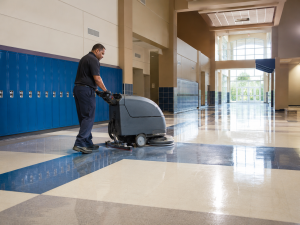
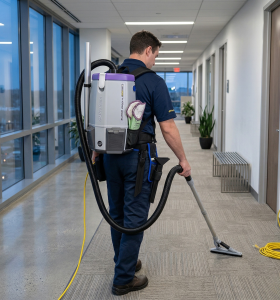
Forgetting about equipment. Cleaning equipment contributes to your environmental footprint through water consumption, energy use, and chemical usage. Auto scrubbers with lower water usage, backpack vacuums with HEPA filtration, and microfiber mop systems all contribute to a more sustainable program.
Frequently Asked Questions
Are green cleaning products more expensive than conventional ones? At the per-unit level, some certified green products cost slightly more. However, when factoring in the cost per diluted gallon, reduced packaging, lower workers’ compensation and health risk exposure, and the potential for multi-surface use that eliminates the need for multiple separate products, the total program cost is often comparable or lower.
Do green disinfectants work as well as conventional ones? Efficacy against specific pathogens is governed by EPA registration, not green certification. Many EPA-registered disinfectants use active ingredients such as hydrogen peroxide, citric acid, or thymol that have better safety profiles than conventional quaternary ammonium compounds. Look for products that are both EPA-registered for the pathogens you need to control and certified by a recognized green certification program.
What is the easiest place to start a green cleaning program? Paper products are typically the lowest-friction starting point. Switching to recycled-content or FSC-certified tissue and towel products requires no process change and often no training adjustment. Concentrated general-purpose cleaners are the next step most facilities find straightforward.
How do I document our green cleaning program for LEED or building certifications? Your LBC sales rep can provide Safety Data Sheets, product certification documentation, and ingredient disclosure information for any product in our catalog. We can also help you build a product documentation package formatted for your specific certification requirements.
Can green cleaning products handle heavy industrial soiling? For most heavy-duty applications, yes. Some highly specific industrial degreasers and specialty chemical applications may still require conventional formulations. Your LBC team can help you identify where green alternatives are a full substitute and where conventional products remain the better choice.
Green cleaning in commercial facilities has moved well past buzzword status. The products exist, the certifications are meaningful, and the performance is there. What remains is a straightforward decision: whether the health, regulatory, and operational benefits are worth pursuing through a thoughtful, phased transition at your facility.
At Leonard Brush & Chemical, we have been helping Louisville facilities managers navigate product decisions since 1879. We carry green-certified options from Spartan, Diversey, and other leading suppliers across every major cleaning category, and our team can help you build a sustainable cleaning program that works for your facility, your staff, and your budget.
Contact us at 502-585-2381 or visit leonardbrushandchemical.com to request a green cleaning product consultation.