August is the last real window most facilities get before the pace of fall kicks in. Schools are about to reopen. Offices and commercial buildings are filling back up after summer slowdowns. Manufacturers are ramping toward Q4. Whatever your facility type, the transition out of summer is one of the best — and most overlooked — opportunities to do a structured safety review before things get busy again.
A facility that has been running summer programs and operating with reduced staffing may have gaps that nobody has had time to address. Fire extinguisher inspections get delayed. PPE supplies are running low and have not been reordered. Safety equipment that needs maintenance gets moved to the back of the list. By the time fall is in full swing, those gaps become problems.
This post walks through the key safety areas every facilities manager should check in August, before the building is fully occupied, and the pace of the season makes it harder to find time.
Fire Extinguisher Inspection
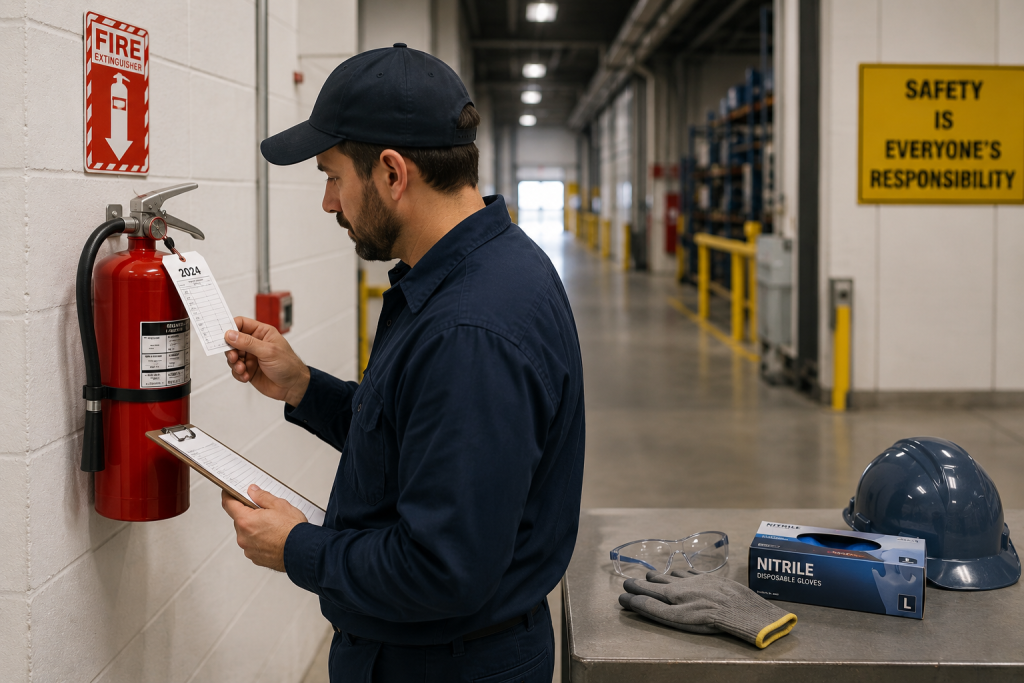
Fire extinguishers are one of the most commonly overlooked safety items in commercial facilities. They are installed on walls and largely ignored until a problem arises. But extinguishers that have not been inspected or maintained may not work when they are needed, and facilities that fail to maintain them face OSHA compliance issues and liability exposure.
Monthly visual inspections. OSHA and NFPA 10 require that portable fire extinguishers be visually inspected monthly. The inspection should confirm the extinguisher is in its designated location, the pressure gauge reads in the operable range, the pin and tamper seal are intact, and the unit shows no visible damage or corrosion. This is a quick check that any staff member can be trained to perform.
Annual professional inspection. In addition to monthly visual checks, extinguishers require an annual inspection by a qualified fire protection professional. If your facility is heading into fall without a current annual inspection tag, schedule it now.
What to check during your August walkthrough. Walk every extinguisher location in your building. Confirm the unit is present and accessible, not blocked by furniture, equipment, or storage. Check the pressure gauge. Check the inspection tag for the date of the last annual service. Flag any overdue unit, show damage, or have a discharged pressure gauge for immediate service or replacement.
Recharging and replacement. Any extinguisher that has been discharged, even partially, must be recharged or replaced before it is returned to service. An extinguisher used during a summer incident and then returned to the wall without recharging is not a functional safety device.
Leonard Brush & Chemical carries Kidde ProLine dry-chemical fire extinguishers suitable for use in commercial facilities. If your walkthrough reveals units that need replacement, we can help you select the right extinguisher for each location in your building.
PPE Stock Review
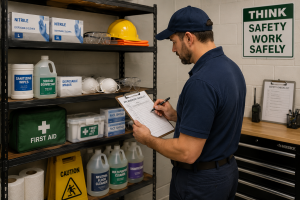
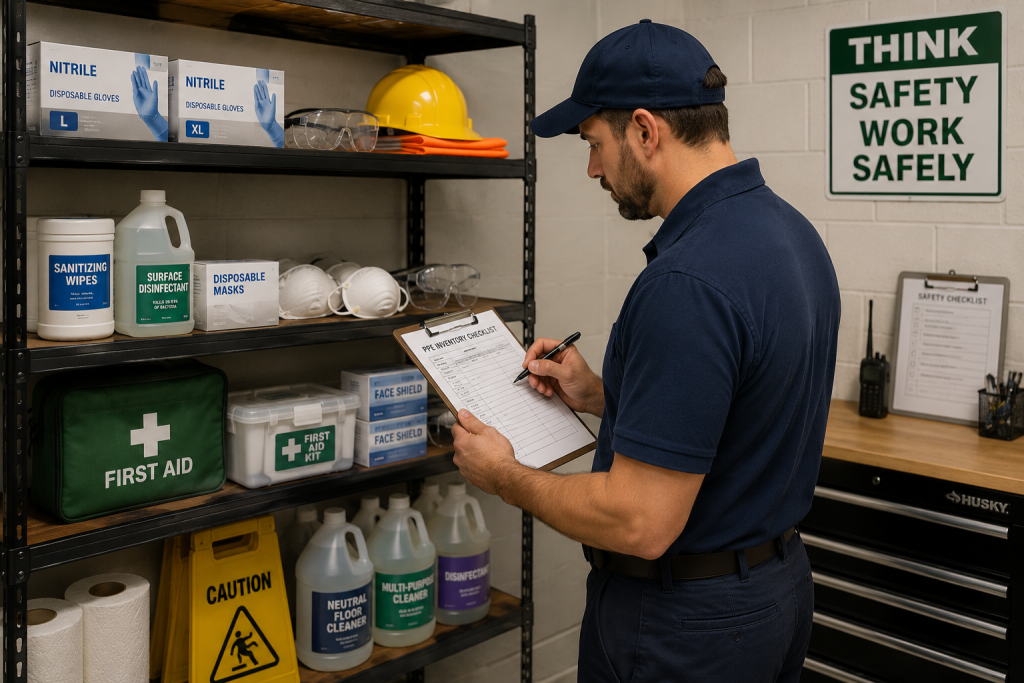
Personal protective equipment is used and consumed year-round, and summer is often when stock levels drift to their lowest without anyone noticing. Before fall occupancy and activity levels return, run a full inventory of your PPE supplies.
Gloves. Check your stock of disposable gloves across all locations where they are used — janitorial closets, kitchens, maintenance areas, and any location where chemical handling occurs. Confirm you have the right type for each application. Nitrile gloves are appropriate for chemical handling and general janitorial use. Latex alternatives may be required in facilities with latex-sensitive occupants or staff.
Eye protection. Safety glasses and face shields used during chemical mixing, floor stripping, or equipment maintenance should be inspected for damage and replaced if lenses are scratched or frames are cracked.
Chemical-resistant aprons. If your cleaning staff handles concentrated chemicals during floor stripping, drain cleaning, or restroom deep cleaning, aprons should be present and in serviceable condition at every location where those tasks are performed.
Respirators and masks. Any facility where staff work with chemicals that require respiratory protection should confirm that the correct respirator type is available, fit-tested, and not past its service or replacement date.
First aid kits. Check all first aid kits in the building. Restock any items that have been used. Confirm the kit contents meet OSHA minimum requirements for your facility type and employee count. Replace any items that are past their expiration date.
A PPE stock review is also a good time to confirm that your staff know where PPE is located and are trained in its proper use. Equipment that is stored but not used correctly does not protect anyone.
Safety Mirrors and Visibility
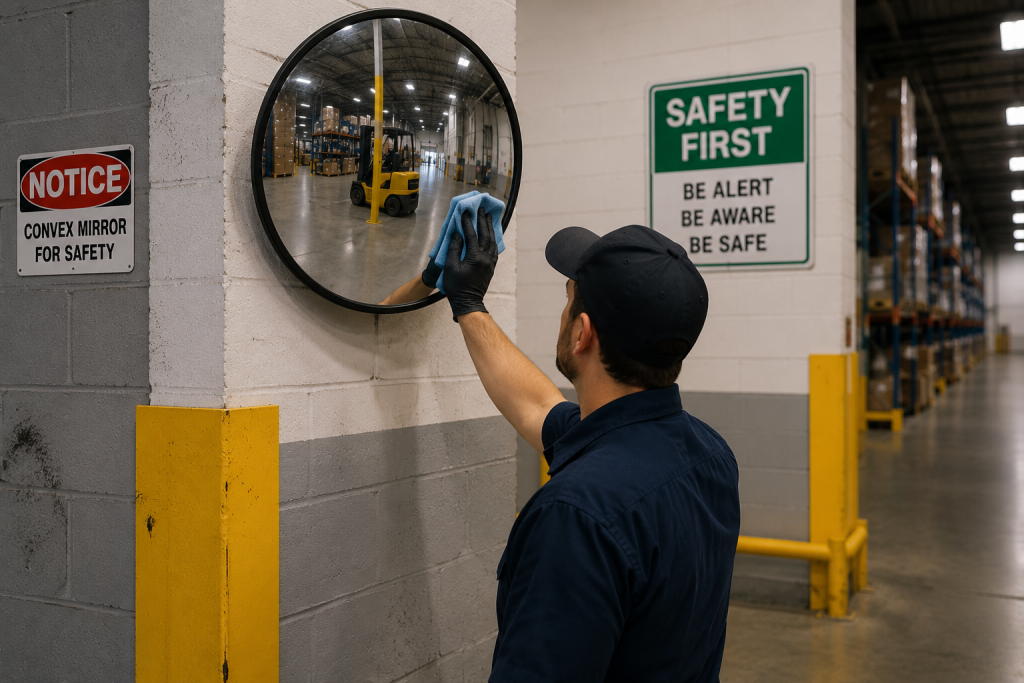
Convex safety mirrors are simple, low-cost tools that are easy to overlook until an incident occurs. In commercial facilities, they serve two purposes: preventing collisions in blind-spot areas and deterring theft or unauthorized access in monitored spaces.
Where convex mirrors belong. Common locations include blind corners in warehouses, loading docks, and manufacturing areas where forklifts or carts operate; hallway intersections where sightlines are limited; parking garage entrances and exits; stairwell landings; and retail or storage areas where visibility is restricted.
What to check in August. Walk your facility and identify corners, intersections, and transition areas where sightlines are limited. Confirm that mirrors are present where needed, positioned correctly to provide a useful field of view, and not obstructed by signage, shelving, or equipment that has been repositioned since the mirror was installed. Clean any mirrors that have accumulated dust or grime — a dirty mirror is significantly less effective than a clean one.
Adding mirrors where they are missing. If your walkthrough identifies blind corners or high-risk areas without mirror coverage, August is a good time to add them before the facility returns to full occupancy and traffic levels. A convex mirror installed before a busy fall season is more useful than one installed after an incident.
Chemical Storage and Labeling
Cleaning chemicals and maintenance supplies used throughout the summer should be audited before fall. This is a compliance issue as well as a practical one.
Confirm all containers are properly labeled. Any container that holds a hazardous chemical must be labeled with the product name and hazard information. Secondary containers — spray bottles, smaller transfer containers — must also be labeled. Unlabeled containers are an OSHA violation and a genuine safety risk.
Check for damaged or leaking containers. Inspect chemical storage areas for containers with damaged caps, cracked bottles, or visible leakage. Dispose of damaged containers according to the product’s safety data sheet instructions and replace them.
Confirm SDS accessibility. Safety Data Sheets for every hazardous chemical in your facility must be accessible to employees. If your facility uses a binder system, confirm it is current and complete. If you use an electronic system, confirm that staff know how to access it.
Separate incompatible chemicals. Acids and bleach-based products should not be stored in proximity. Confirm your chemical storage areas maintain appropriate separation between product categories.
Review dilution stations and dispensing equipment. If your facility uses chemical dispensing systems or dilution control stations, confirm they are functioning correctly and that staff are using them properly. Dispensing equipment that is out of calibration can result in an over-diluted product that does not clean effectively or an over-concentrated product that creates an unnecessary risk of chemical exposure.
Janitorial Equipment Check
Before fall volume returns, take stock of the equipment your cleaning staff will rely on during the busier months ahead.
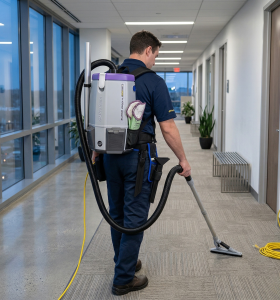
Vacuums. Check filters, bags, belts, and hoses on all vacuums. A vacuum running with a clogged filter or worn belt is working harder than it needs to and delivering worse results. Replace filters and belts on schedule, not after performance degrades visibly.
Mops and buckets. Mop heads that have been in heavy summer use may be past the point of effective cleaning. Worn or frayed mop heads harbor bacteria and spread contamination rather than removing it. Replace them before they become a problem. Inspect buckets and wringers for damage.
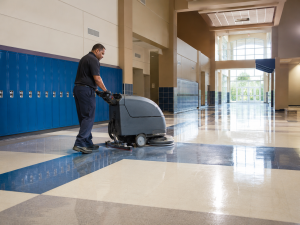
Auto-scrubbers and floor machines. If your facility uses an auto-scrubber or rotary floor machine, inspect the brushes or pads for wear, check the squeegee blade for nicks or distortion, and confirm that the recovery and solution tanks are clean and free of residue buildup. Address any maintenance needs before the machine is needed for fall floor care.
Carts and caddies. Inspect janitorial carts for broken shelves, damaged wheels, or missing components. A well-organized, fully functional cart makes a cleaning shift more efficient and reduces the likelihood of supplies being left in the wrong location.
Common Mistakes in Pre-Fall Safety Reviews
Doing a visual walkthrough without a written checklist. A walkthrough without a checklist relies on memory and catches fewer issues. Use a written or digital checklist so every area and every item gets documented.
Deferring fire extinguisher service until it is more convenient. There is no more convenient time than August. Once fall occupancy returns, finding time to pull units for service or walk every location for inspection gets harder.
Restocking PPE reactively instead of proactively. Ordering gloves, eye protection, and first aid supplies after you run out means your staff is working without them in the gap. A proactive August inventory prevents that.
Ignoring equipment maintenance until something breaks. Preventive maintenance on vacuums, scrubbers, and floor machines costs less in time and money than emergency repairs or replacements during the busy season.
Not training new staff before volume returns. If you have onboarded new cleaning or maintenance staff over the summer, confirm they have received safety training — including chemical handling, PPE use, equipment operation, and emergency procedures — before the building reaches full capacity.
Frequently Asked Questions
How often should fire extinguishers be inspected? Monthly visual inspections are required by OSHA and NFPA 10. Annual professional inspections are also required. Some extinguisher types require additional maintenance at six-year or twelve-year intervals, depending on type and service history. Check the inspection tag on each unit and confirm it is current.
What PPE is required for janitorial staff handling cleaning chemicals? At minimum, chemical-resistant gloves appropriate to the chemicals being handled, and eye protection when there is a splash risk. Concentrated chemicals — floor strippers, drain cleaners, heavy-duty degreasers — may also require respiratory protection and aprons, depending on the product’s SDS. Always consult the Safety Data Sheet for each product.
How do I know if a convex mirror is positioned correctly? Stand at the approach point from which a person or vehicle would be coming, and confirm that you can see the hazard area clearly in the mirror. The mirror should be mounted high enough to provide a full field of view without obstruction, and angled so the reflection covers the relevant blind spot. If you cannot see the hazard from the approach point, the mirror needs to be repositioned.
What should a facility’s first aid kit contain? OSHA does not specify an exact list of contents but references ANSI/ISEA Z308.1 as the minimum standard for workplace first-aid kits. The standard specifies items including adhesive bandages, gauze pads, antiseptics, burn treatment, and other basic supplies. Kit contents should also be appropriate for the specific hazards in your facility.
When should cleaning equipment be replaced rather than repaired? When repair costs approach or exceed the cost of replacement, or when the equipment can no longer perform its function reliably after maintenance, replacement is the right call. For consumable components such as mop heads, vacuum filters, and scrubber pads, replacement should be scheduled rather than waiting for an obvious failure.
Your Facility Safety Checklist Before Fall
August is the right time to take a structured look at your facility’s safety posture before occupancy and activity levels return in the fall. A few hours spent on fire extinguisher checks, PPE inventory, safety mirror coverage, chemical storage review, and equipment maintenance pays returns all season long in reduced incidents, better compliance, and a building that is ready for the pace ahead.
If you need fire extinguishers, PPE, convex safety mirrors, or any of the cleaning and maintenance supplies covered in this post, Leonard Brush & Chemical stocks a full range of commercial safety and janitorial products and delivers throughout the Louisville metro area and surrounding region. We have been helping facilities managers keep their buildings safe and running smoothly since 1879.
Call us at 502-585-2381 or visit leonardbrushandchemical.com to talk to a product specialist or place your fall supply order.