Fall Pest Prevention for Kentucky Commercial Buildings
Every October, Kentucky facilities managers notice the same thing. A few lady beetles on a sunny window. Then a few dozen in a stairwell. Stink bugs crawling along a lobby wall. A mouse dropping in the break room. Tiny flies hovering over a floor drain.
As temperatures drop, insects and rodents start looking for a warm place to spend the winter, and commercial buildings are an easy target. Fall pest prevention does not start with a spray bottle. It starts with sanitation and a few habits your cleaning team can build into its routine right now.
Why Fall Brings Pests Indoors
Pests come inside in the fall for two reasons: shelter and food.
Shelter seekers. According to the University of Kentucky Department of Entomology, multicolored Asian lady beetles fly to buildings mostly in October, usually on sunny afternoons after a cool spell. They gather on sunny, southwest-facing walls and slip inside through gaps as small as 1/8 inch. Stink bugs and boxelder bugs follow a similar pattern.
Food seekers. Mice, cockroaches, and flies are drawn in by crumbs, food waste, grease, and moisture. Break rooms, cafeterias, trash areas, and floor drains give them everything they need.
You cannot control the weather, but you can control how welcoming your building is once pests reach the door.
Step 1: Clean Up Shelter Seekers the Right Way
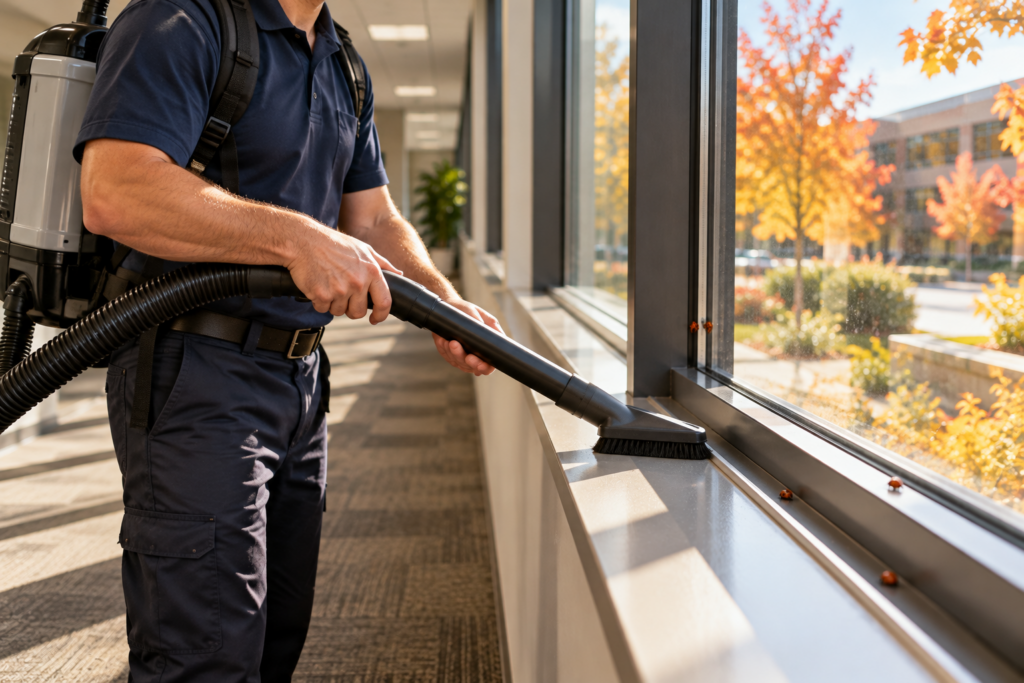
When lady beetles and stink bugs get inside, the instinct is to grab a broom. That usually makes things worse. Lady beetles release a yellowish fluid with an unpleasant odor when disturbed, and it can stain walls, carpet, and window sills.
The University of Kentucky recommends vacuuming instead. It is cleaner and more effective.
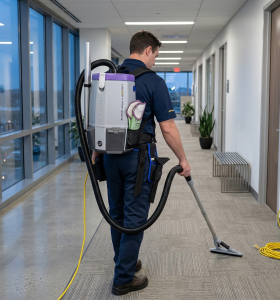
- A backpack vacuum like the ProTeam Super Coach Pro 6 lets custodians quickly reach window frames, high corners, and light fixtures.
- For large numbers in stairwells, warehouses, or loading areas, a ProTeam ProGuard 20 Wet/Dry Vacuum handles the volume.
- Empty vacuum bags or tanks outside the building, away from entrances.
- Indoor sprays and foggers are generally not recommended for these insects. They are often ineffective and can leave stains or residue.
Step 2: Take Away the Food
Rodents and crawling insects stay where food is easy to find. Tightening up sanitation in food areas is the single biggest thing your team can do.
- Wipe break room counters, tables, and microwaves daily, and sweep under appliances weekly.
- Store snacks and food supplies in sealed containers, not open boxes.
- Clean up spills in cafeterias and kitchens right away, including under equipment.
- Use a cleaner that removes the residue pests are attracted to. Spartan Consume Nature’s Way Cleaner Odor Eliminator uses natural bacteria to break down organic soils and odors on surfaces.
Step 3: Manage Trash Like a Pest Magnet
Trash is the number one attraction for flies and rodents. A few simple changes make a big difference.
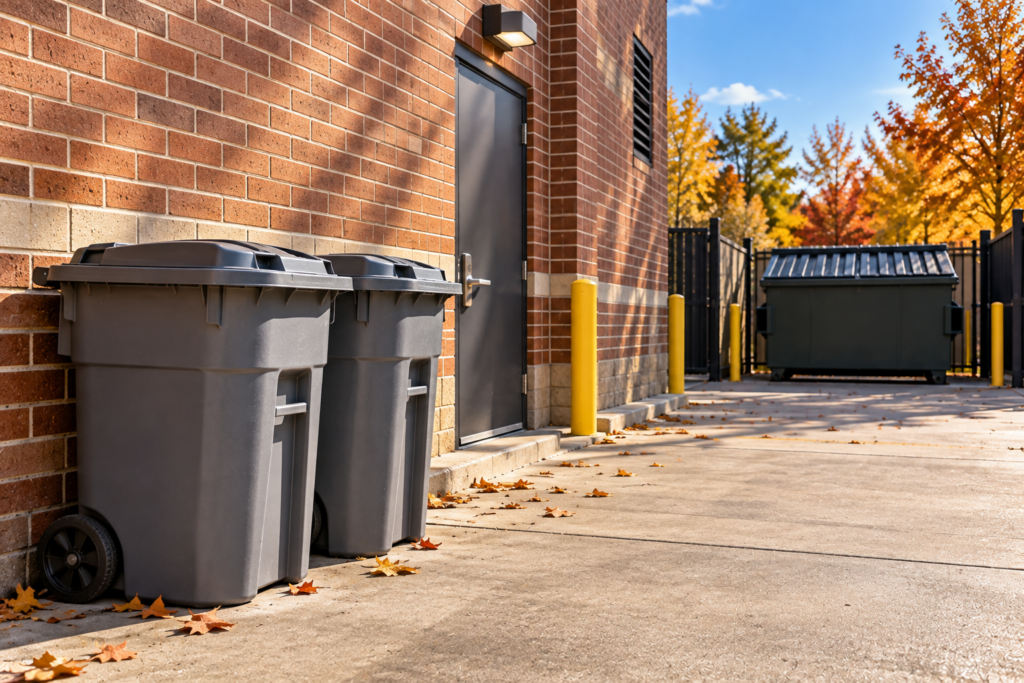
- Use containers with tight-fitting lids, especially near kitchens and loading docks. A Suncast Commercial Utility Trash Can Lid fits standard 32-gallon cans.
- Empty food waste containers at the end of every day.
- Use heavy-duty can liners that will not tear and leak on the way to the dumpster.
- Wash out trash cans regularly. Residue at the bottom of a can attracts flies even after the bag is gone.
- Keep dumpsters closed and, when possible, place them away from doors.
Step 4: Stop Drain Flies at the Source
Small flies hovering around restrooms and kitchens are often drain flies or fruit flies breeding in the organic buildup inside floor drains, sinks, and grease traps. Spraying the flies will not fix it. Cleaning the drain will.
- Treat floor drains regularly with an enzyme or bacterial product. Spartan Consume Drop-in-a-Drain Treatment works continuously to digest buildup inside the drain.
- For slow drains and heavy buildup, Spartan Bloc-Aid Drain and Sewer Cleaner helps break down organic material.
- Pour water into seldom-used floor drains to keep the trap filled.
- Browse LBC’s full selection of drain and sewer maintenance products for grease traps and lift stations.
To monitor flying insects in kitchens and break rooms, an SC Johnson STEM Light Trap or an Insect Inn Commercial Grade Fly Control System can catch flies and show you whether the problem is improving.
Step 5: Close the Doors on Pests
Cleaning keeps pests from settling in. Closing gaps keeps them out in the first place. The University of Kentucky notes that sealing cracks and openings is the most permanent way to keep lady beetles out.
Walk the building with your maintenance team and look for:
- Gaps around windows, doors, and utility lines
- Missing or worn door sweeps on exterior doors
- Torn window and vent screens
- Doors propped open at loading docks and side entrances
Even small repairs this time of year can reduce how many pests make it inside.
Common Mistakes to Avoid
Sweeping or crushing lady beetles. This leads to stains and odor. Vacuum them instead.
Spraying flies instead of cleaning drains. Flies will keep coming back until you remove the breeding source.
Leaving trash overnight in kitchens and break rooms. Overnight trash is an open invitation to rodents and roaches.
Ignoring small signs. A few droppings or a handful of beetles is the time to act, not after the problem spreads.
Treating cleaning and pest control as separate jobs. Your custodial team is your first line of defense. A licensed pest control professional should handle active infestations, but good sanitation makes their work last.
Frequently Asked Questions
When do lady beetles invade buildings in Kentucky?
Most activity happens in October, usually on sunny afternoons following cooler weather, according to the University of Kentucky.
What is the best way to remove lady beetles from a building?
Vacuum them. Sweeping or crushing them can cause staining and odor from the fluid they release.
How do I get rid of drain flies in a commercial restroom?
Clean the drain, not the air. Use an enzyme or bacterial drain treatment to break down the organic buildup where the flies breed, and keep drain traps filled with water.
Do I still need a pest control company?
For active infestations, yes. A licensed pest control professional should handle treatments. Good sanitation and cleaning help keep pests from returning.
Can Leonard Brush & Chemical help with sanitation supplies?
Yes. Our team can help you choose vacuums, drain treatments, trash containers, can liners, and cleaning chemicals that support a strong fall pest prevention routine.
Conclusion
Fall pest prevention is mostly about the basics done well: vacuum shelter seekers, remove food sources, manage trash, treat drains, and close the gaps. When your cleaning routine makes the building less welcoming, pests are far more likely to look somewhere else for the winter.
Since 1879, Leonard Brush & Chemical has helped Louisville and Kentucky facilities stay clean, safe, and healthy. From backpack vacuums to drain treatments and trash supplies, we carry what your team needs to keep pests out this season.

Call 502-585-2381 or visit leonardbrushandchemical.com to build your fall pest prevention plan.