Summer changes everything about how a commercial building gets used — and almost none of those changes are good for your floors.
Foot traffic increases. Doors stay open longer. Sand, grit, and moisture get tracked in from parking lots, sidewalks, and landscaped areas. Building occupants wear lighter, harder-soled shoes. And in many facilities, the cleaning crew that kept up with daily scrubbing during the school year or slower winter months is running with reduced summer staffing.
The result, if you are not proactive about it, is a floor finish that shows heavy wear patterns by August and needs significantly more work to restore in the fall than it would have if you had stayed ahead of it. This post walks through the practical steps to protect your floors through the summer season and set up a much easier fall maintenance program.
Why Summer Is Hard on Commercial Floors
Understanding what damages floor finish helps you prioritize where to focus your effort.
Grit is the primary enemy. Sand, fine gravel, and soil particles tracked in on shoe soles act like sandpaper on floor finish. Every footstep grinds those particles against the finish surface. In a high-traffic corridor or entry, the cumulative effect over a summer week can visibly dull a finish that looked good on Monday by Friday afternoon.
Moisture accelerates wear. Summer means more wet shoes, umbrellas dripping in entries, and spills from cold beverages. Moisture that is not removed promptly temporarily softens the floor finish, making it more vulnerable to scuffing and abrasion. Pooled water at entry points is one of the fastest ways to damage the finish in a localized area.
Increased traffic concentrates wear patterns. Summer programs, visitors, outdoor events, and longer operating hours all add foot traffic. That traffic is rarely evenly distributed — it concentrates in entries, corridors, elevator lobbies, and other transition zones, creating visible traffic lanes in the finish that spread outward over time.
Reduced staffing means less frequent cleaning. If your facility operates with lighter custodial coverage in summer, floors may go longer between mopping cycles than they would during the regular season. Soil that sits on a floor finish longer causes more cumulative damage.
Start at the Door: Entry Matting
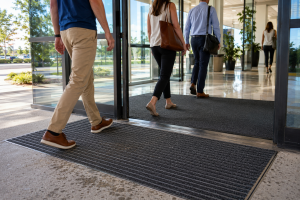
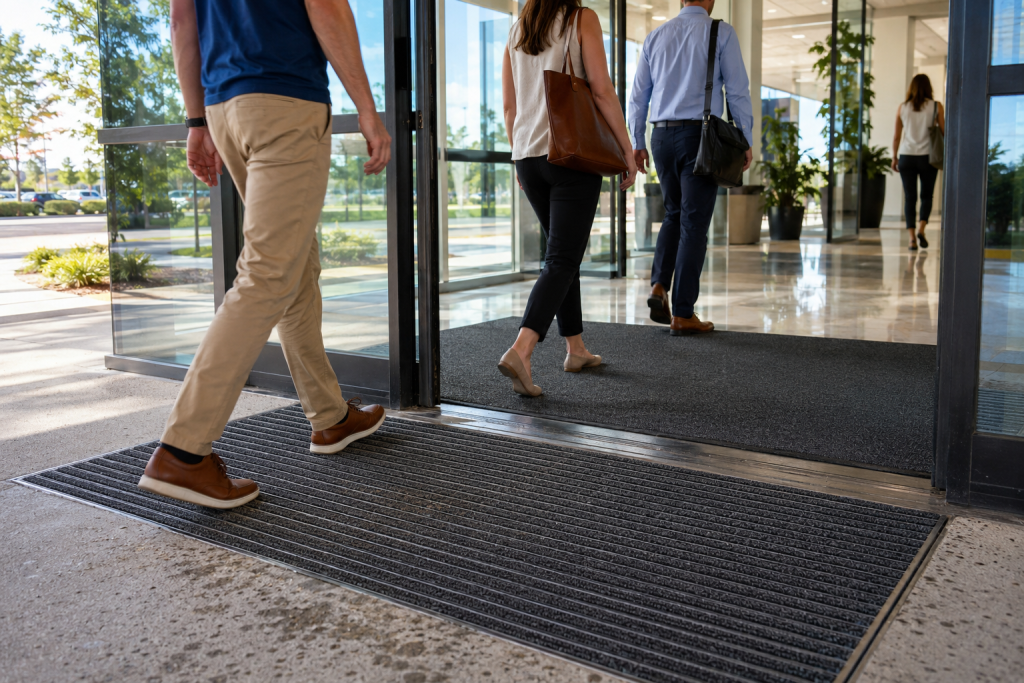
The most cost-effective investment in summer floor protection is one that prevents soil from reaching your finished floors. Entry matting systems at every exterior entrance can capture up to 80% of the soil, moisture, and grit that would otherwise be tracked into the building.
An effective entry matting system uses two zones. The scraper mat immediately outside or at the threshold removes heavy debris and coarse soil from shoe soles. The wiper-absorber mat inside the entrance captures fine soil particles and absorbs residual moisture. Together, a properly sized two-mat system dramatically reduces the volume of abrasive material that reaches your corridors and interior spaces.
Mat sizing matters. A mat that is too short does not give occupants enough steps to clean their shoes effectively. Industry guidance recommends a minimum of 10 to 15 feet of matting from the entry point to allow adequate contact between shoe soles and mat surface. In heavy-traffic entries, more is better.
Mats also need to be maintained. A mat that is saturated with soil and moisture is no longer capturing anything — it is redistributing it. Vacuum or shake out dry mats daily in summer, and launder or replace wet mats frequently enough so they do not contribute to the problem they are supposed to solve.
Adjust Your Scrubbing Schedule
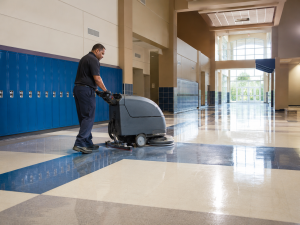
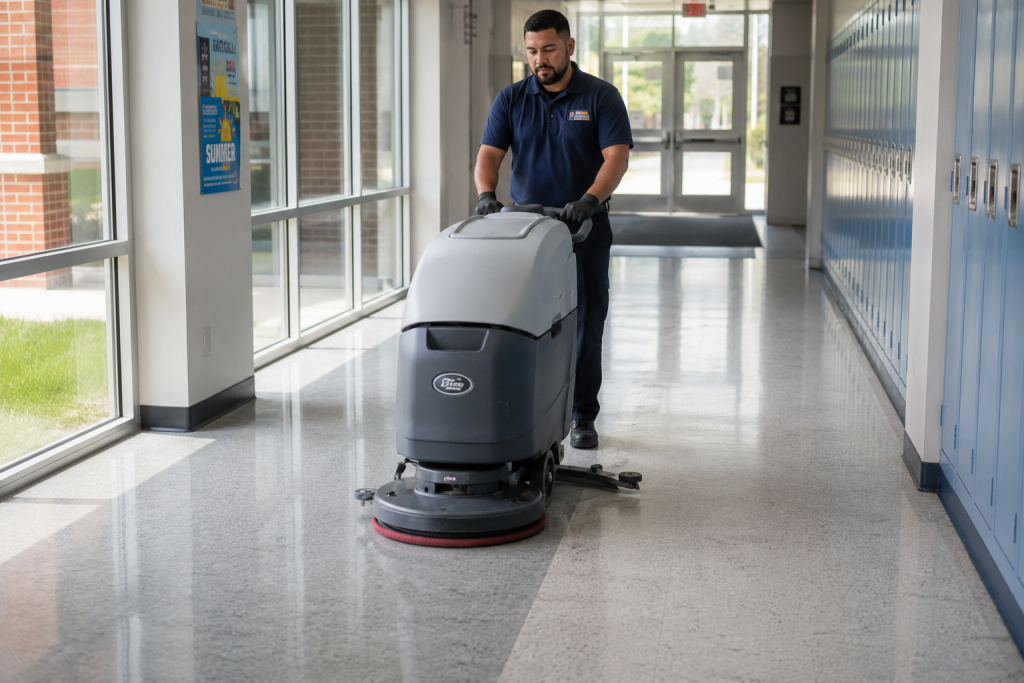
Daily mopping maintains a floor’s appearance between deeper cleanings, but mopping alone does not remove the embedded soil and fine grit that accumulates in floor finish over time. That requires mechanical scrubbing — either with an auto-scrubber or a rotary floor machine — which agitates and lifts embedded soil that a mop head cannot reach.
During normal operations, many facilities scrub floors on a weekly or biweekly schedule. In summer, when grit load and traffic volume increase, that schedule may need to be compressed. High-traffic corridors, entries, cafeterias, and lobbies may need scrubbing two or three times per week to stay ahead of the damage.
The key indicator is whether the floor looks dull after mopping. A properly finished floor that has been mopped should have a consistent sheen. If a freshly mopped floor still looks flat or shows visible traffic patterns, the finish surface has accumulated enough embedded soil that scrubbing — not more mopping — is what it needs.
Use a neutral floor cleaner diluted correctly for your auto-scrubber or floor machine. Cleaners that are too alkaline will gradually strip floor finish over repeated use, shortening the interval between full strip-and-refinish cycles. A pH-neutral product maintains the finish while cleaning effectively.
Know When to Recoat (and When to Strip)
One of the most common and costly mistakes in commercial floor care is waiting too long to address a deteriorating finish. Catching finish wear at the right stage saves significant labor and product costs compared to waiting until a full strip is the only option.
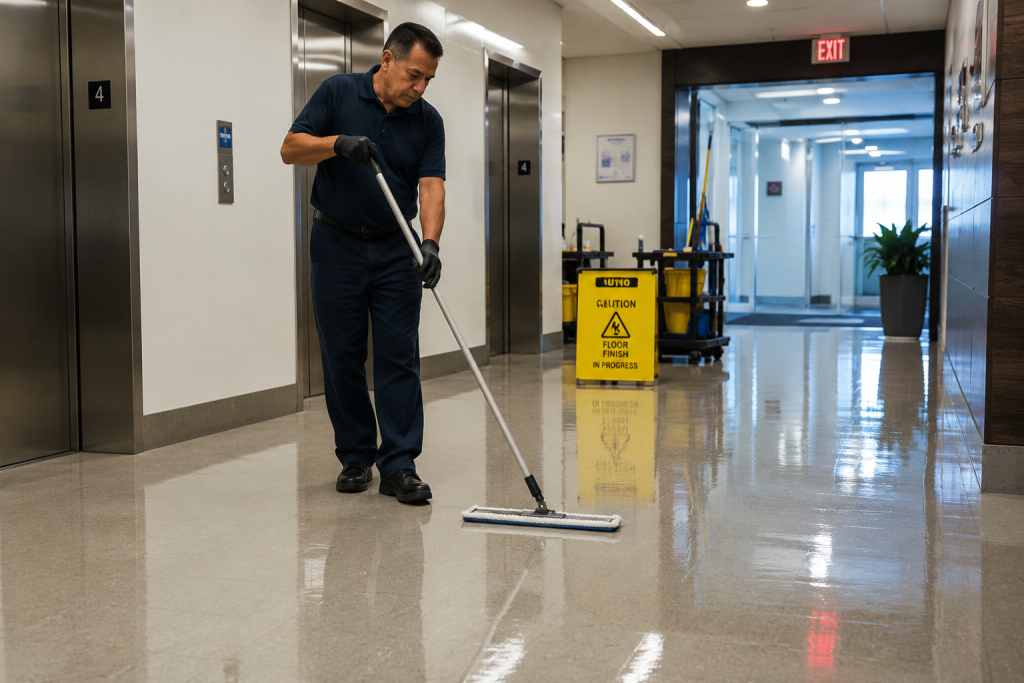
When to recoat. If your floor finish shows surface dulling, minor scuff marks, and light traffic patterns but the finish itself is still intact and adhering well, a scrub-and-recoat is the right approach. Scrub the floor to remove surface soil and lightly abrade the finish, then apply one or two fresh coats of finish over the existing layers. This restores sheen and adds a fresh protective layer without the time and labor of a full strip.
When to strip. If the finish has built up too many layers and is yellowing, if there are areas where the finish is peeling or flaking, or if traffic patterns have worn through the finish to the bare tile in high-use zones, a full strip is necessary. Stripping removes all existing finish layers, allows the floor to be cleaned down to the tile surface, and gives you a clean base for fresh finish application. Summer deep cleaning — covered in our July blog post — is typically when facilities do full strip-and-refinish work.
The recoat window. In summer, monitoring your floors every two to three weeks and recoating at the first signs of finish wear is far more efficient than waiting. A recoat on a floor that still has good finish adhesion takes a fraction of the time and product of a strip-and-refinish. It also keeps the floor looking consistently good rather than cycling between polished and worn.
Protect High-Traffic Zones Specifically
Not all areas of your facility need the same level of attention. Focusing your summer floor-care efforts on the zones that take the most damage lets you stretch your custodial labor further.
Entries and vestibules take the highest concentration of tracked-in soil and moisture. These areas may need scrubbing every day or two in the summer and should be the first places you check when conducting a floor condition assessment.
Elevator lobbies and stairwells concentrate traffic into a very small floor area. The finish in these zones wears faster than anywhere else in the building. Spot recoating of elevator lobbies — rather than entire floor plates — is a practical way to maintain appearance without full-scale refinishing.
Cafeteria and food service areas deal with grease, food spills, and heavy chair movement in addition to foot traffic. A degreasing floor cleaner appropriate for food-service environments is important here, and the scrubbing frequency should match the meal-service schedule.
Corridors and main circulation routes are the visible face of your facility’s cleanliness. Traffic lane patterns that develop in corridor finishes are visible from a distance and create a strong impression — positive or negative — on visitors and building occupants. Staying ahead of finish wear in corridors is worth the extra scrubbing cycles.
Common Mistakes in Summer Floor Care
Skipping the entry mat system. No amount of mopping and scrubbing can compensate for soil being continuously tracked in. Mats are the first line of defense and the highest-return investment in floor protection.
Using the wrong dilution on your floor cleaner. An over-diluted cleaner does not clean effectively. Under-diluted or overly alkaline cleaner strips finish over time. Follow the manufacturer’s dilution ratio and use a measured dispensing system if your team is mixing by hand.
Waiting for visible damage before scrubbing. By the time traffic patterns are clearly visible, the finish has already sustained significant abrasion. Scrub on a preventive schedule based on traffic level, not on appearance alone.
Applying finish over dirty or inadequately prepped floors. A recoat applied over a floor that has not been properly scrubbed will trap soil under the finish and produce a cloudy, uneven result. Prep is not optional.
Not adjusting the summer schedule. A floor maintenance schedule that works in October will not be adequate in July. Revisit your scrubbing frequency and matting program at the start of summer and adjust based on what your floors actually need.
Frequently Asked Questions
How often should commercial floors be scrubbed in summer? It depends on traffic level and floor type, but high-traffic corridors, entries, and common areas typically need scrubbing two to three times per week during summer months. Lower-traffic areas may hold to a weekly schedule. The condition of the floor after mopping is your best guide — if it still looks dull, it needs scrubbing.
What is the best floor cleaner for summer maintenance? A pH-neutral floor cleaner, diluted to the manufacturer’s recommended ratio, is the right choice for routine summer maintenance. Neutral cleaners maintain the integrity of the floor finish over repeated use. Your LBC sales rep can recommend a product matched to your floor type and auto-scrubber setup.
How do I know if my floor needs a recoat or a full strip? If the finish is dulling and showing wear patterns but still adhering well to the tile surface, a scrub and recoat is likely sufficient. If the finish is yellowing, peeling, or worn through to bare tile in traffic zones, a full strip-and-refinish is needed. When in doubt, an LBC product specialist can evaluate your floors and recommend the right approach.
Can I apply new floor finish coats in summer heat? Floor finish application requires adequate ventilation and a stable temperature range — typically between 65 and 85 degrees Fahrenheit. High humidity can extend dry times and affect finish clarity. Avoid applying finish during peak heat hours or in poorly ventilated spaces. Early morning application in air-conditioned facilities works well.
What entry mat is best for a high-traffic commercial entry? A two-mat system with a scraper mat at the threshold and a wiper-absorber mat inside the entry is the standard recommendation. The mat size should provide at least 10-15 feet of contact area. For high-traffic entries, a rental mat service that provides clean mats on a regular exchange schedule is worth considering.
The Bottom Line on Summer Floor Care
Summer does not have to mean watching your floor finish deteriorate for three months and spending September undoing the damage. With the right entry matting, an adjusted scrubbing schedule, and attention to the zones that take the heaviest wear, you can keep your floors looking consistently good through the season and head into fall with a finish that needs a recoat rather than a full strip.
If you are not sure where your floors stand, or if you need help selecting the right scrubbing equipment, floor cleaner, or finish for your facility, Leonard Brush & Chemical has been helping Louisville facilities managers get this right for over 140 years. We carry a full line of commercial floor care products and can help you put together a summer maintenance program that fits your building, your traffic patterns, and your staffing level.
Call us at 502-585-2381 or visit leonardbrushandchemical.com to talk to a floor care specialist.